


Yes, testosterone replacement therapy can be stopped, but do not stop, skip, taper, or change a dose on your own. The prescribing clinician should plan the change and follow-up because prior symptoms may return, and natural testosterone or sperm production may recover slowly or incompletely. Outcomes depend on the original diagnosis, formulation, treatment duration, health, and fertility goals.
This article provides general education and does not diagnose a condition or provide a stopping plan. Do not stop, taper, restart, or change testosterone or another prescription without guidance from the prescribing clinician. Individual evaluation and follow-up are required.
This article addresses testosterone prescribed to adult men for hypogonadism. It does not cover gender-affirming hormone therapy, nonmedical anabolic-steroid use, bodybuilding cycles, or post-cycle therapy. Those situations have different goals, evidence, and risks and require population-specific clinical guidance.
People ask before treatment and when concerns arise about benefit, side effects, fertility, or long-term care. A useful answer starts with why testosterone was prescribed and separates drug clearance from recovery of the body's own production.
What does stopping TRT mean?
Testosterone replacement therapy (TRT) supplies testosterone from outside the body. That external testosterone can reduce the signals from the hypothalamus and pituitary that tell the testes to make testosterone and support sperm production. These signals include luteinizing hormone (LH) and follicle-stimulating hormone (FSH).
Once treatment ends, two processes matter. Testosterone supplied by the medication declines according to the product and its dosing history. The hypothalamic-pituitary-gonadal axis may then begin recovering its own signaling, but that recovery has a separate timeline.
The distinction explains why the last dose does not mark an instant return to a pretreatment state. A long-acting injection, a shorter-acting injection, and a daily topical product create different medication-exposure patterns. The original cause of low testosterone may still be present after the drug level falls.
The FDA's current testosterone information lists several approved formulations and describes the medical-condition context for approved testosterone products. Product-specific labeling still matters because formulation affects how long testosterone remains in the body.
What may happen after the last TRT dose?
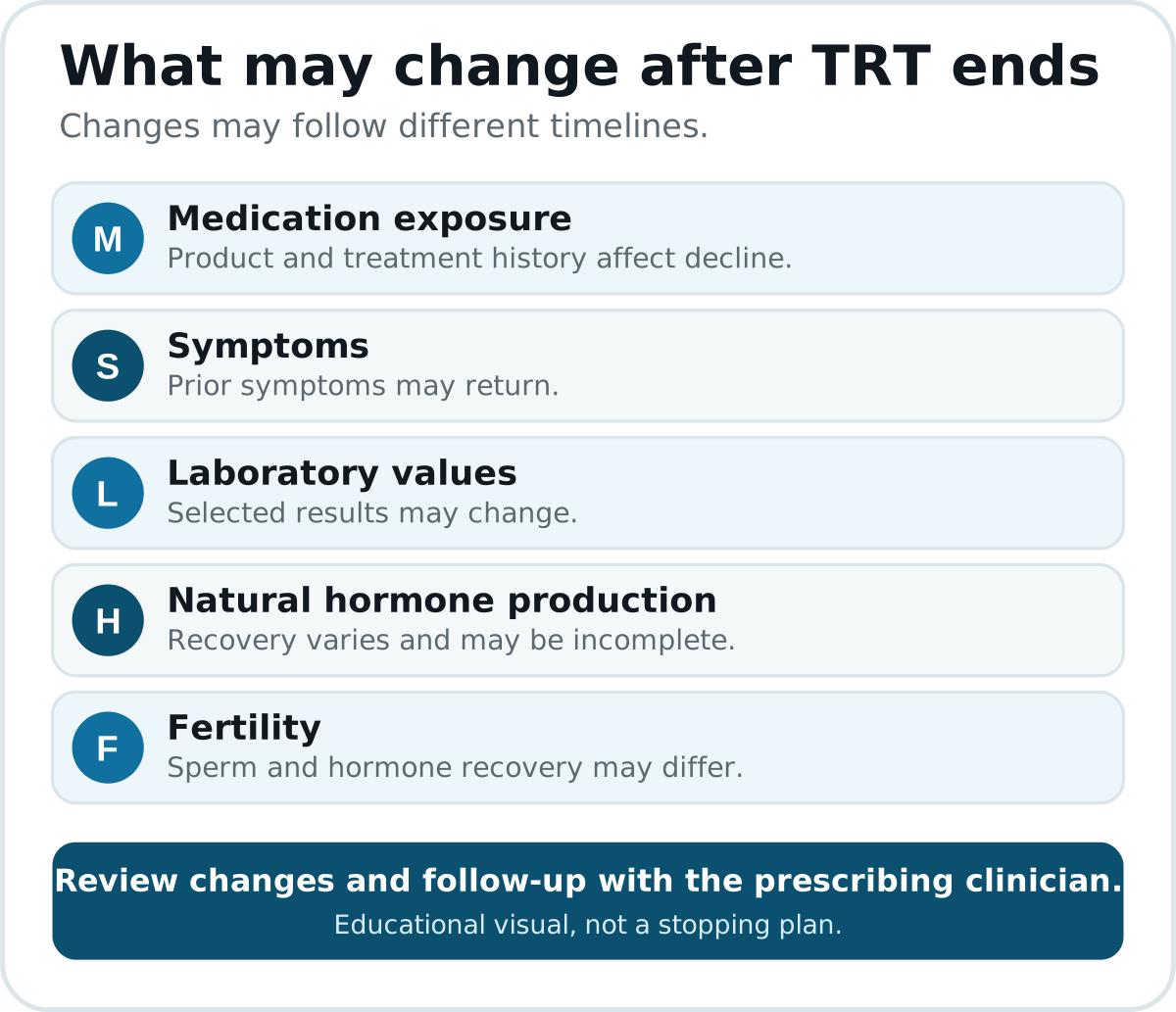
No single sequence applies to every patient. A clinician may watch several areas after treatment changes:
- Medication exposure: Testosterone supplied by the product falls based on the formulation, dose history, and timing of the final administration.
- Symptoms: Fatigue, reduced libido, mood changes, or other concerns that led to treatment may return. Those symptoms have many possible causes and do not prove a testosterone level by themselves.
- Laboratory values: Testosterone and other selected results may change as medication exposure falls and the body's signaling responds.
- Fertility: Sperm production can remain suppressed after serum testosterone changes. Fertility recovery and hormone recovery are related, but they are not identical.
- Treatment-related concerns: An adverse effect or monitoring issue may improve, persist, or need separate care. The prescriber decides what requires follow-up.
A symptom can also change before a laboratory result, or the reverse can happen. This is why a prescriber may plan the timing of follow-up around the exact product rather than using a generic calendar found online.
Stopping treatment also does not erase the original diagnosis. If a lasting testicular, pituitary, or hypothalamic condition caused the deficiency, the body may still have the same production limit after medication exposure declines.
Will natural testosterone production come back?
Natural testosterone production may recover after TRT-induced suppression, but a return to a particular level cannot be promised. The answer depends on what the body could produce before treatment and why the patient had low testosterone in the first place.
The Endocrine Society guideline recommends identifying the cause of hypogonadism. It distinguishes primary hypogonadism, which involves the testes, from secondary hypogonadism involving pituitary or hypothalamic signaling. That distinction matters after treatment ends.
A patient whose testes cannot produce enough testosterone because of a lasting medical condition has a different outlook from someone whose own hormone axis was functioning before exogenous testosterone. Illness, other medicines, weight change, sleep problems, and additional health factors can also affect a clinician's interpretation. An online article cannot determine which explanation applies.
The 2016 review Recovery of Spermatogenesis Following Testosterone Replacement Therapy or Anabolic-Androgenic Steroid Use summarizes recovery reported in studied groups after exogenous testosterone ended. Its evidence includes male-contraception and anabolic-steroid populations, so those group findings cannot establish one person's likelihood or timing of recovery after prescribed TRT.
Fertility follows its own timeline
Serum testosterone and sperm production measure different functions. A testosterone result moving toward baseline does not prove that sperm production has recovered. The reverse cannot be assumed either.
The Endocrine Society recommends against starting testosterone therapy in men planning fertility in the near term. Anyone who may want biological children should raise that goal before starting TRT and again before changing it. A prescriber may involve a reproductive urologist or another appropriate specialist when fertility is a priority.
Do not use a home testosterone test, a change in testicular size, or a change in libido as proof of fertility. Semen analysis and the rest of a fertility evaluation require professional interpretation.
How long can recovery take after stopping TRT?
There is no reliable universal recovery deadline. Formulation, treatment duration, age, baseline hormone function, health conditions, and the reason for treatment can all affect the course. Hormone levels, symptoms, and sperm production may also recover at different rates.
A 2022 study of a selected population who received long-acting testosterone undecanoate for two years found gradual LH and FSH movement toward pretreatment values after injections stopped.
The study does not establish a timeline for other formulations or for patients whose hypogonadism has a persistent medical cause. Its selected population and long-acting injection schedule limit how far the finding can be applied.
Fixed statements such as "natural testosterone returns in three months" or "everyone recovers by six months" remove the variables that matter most. A clinician can offer a more useful estimate after reviewing the original laboratory results, treatment record, current symptoms, and exact formulation.
Do you need to taper TRT?
An online article cannot tell you whether or how to taper TRT. Products, treatment histories, diagnoses, and reasons for stopping differ, so the prescriber should decide whether and how a dose or interval changes.
Do not skip, delay, taper, or stop a prescribed dose on your own. The phrase "cold turkey" is not a clinical plan because it leaves out the product and treatment history.
The prescriber may stop, adjust, investigate, or choose another approach after reviewing the case. This article cannot recommend clomiphene, enclomiphene, human chorionic gonadotropin, or another prescription as a routine restart method.
Contact the prescribing office before the next change if side effects, cost, access, fertility plans, or doubts about benefit are pushing you to alter treatment on your own. The clinician needs to know what was taken and when, even if doses have already been missed.
If symptoms are severe, rapidly worsening, or may be an emergency, seek urgent or emergency medical care instead of waiting for the prescribing office.
Why might someone discuss stopping TRT?
TRT should have a defined clinical purpose and a way to judge whether it is helping. A stopping discussion may be appropriate when:
- Testosterone levels changed as intended but the symptoms or signs being treated did not improve.
- An adverse effect, laboratory change, or new health concern changes the balance of benefit and risk.
- Fertility has become a current goal.
- New information changes the original diagnosis or reveals another cause of the symptoms.
- The patient wants to reconsider treatment after an informed discussion of the likely consequences and alternatives.
The American Urological Association testosterone-deficiency guideline gives one specific follow-up example. It advises clinicians to discuss stopping therapy three to six months after treatment begins when total testosterone normalizes and the patient's symptoms or signs fail to improve. This is a clinician discussion point, not a patient-directed stopping schedule.
The Endocrine Society also recommends assessing treatment response and adverse effects after therapy begins. Together, these principles support a simple question: what measurable benefit is the treatment expected to provide, and did that benefit occur?
What should a clinician review before and after treatment ends?
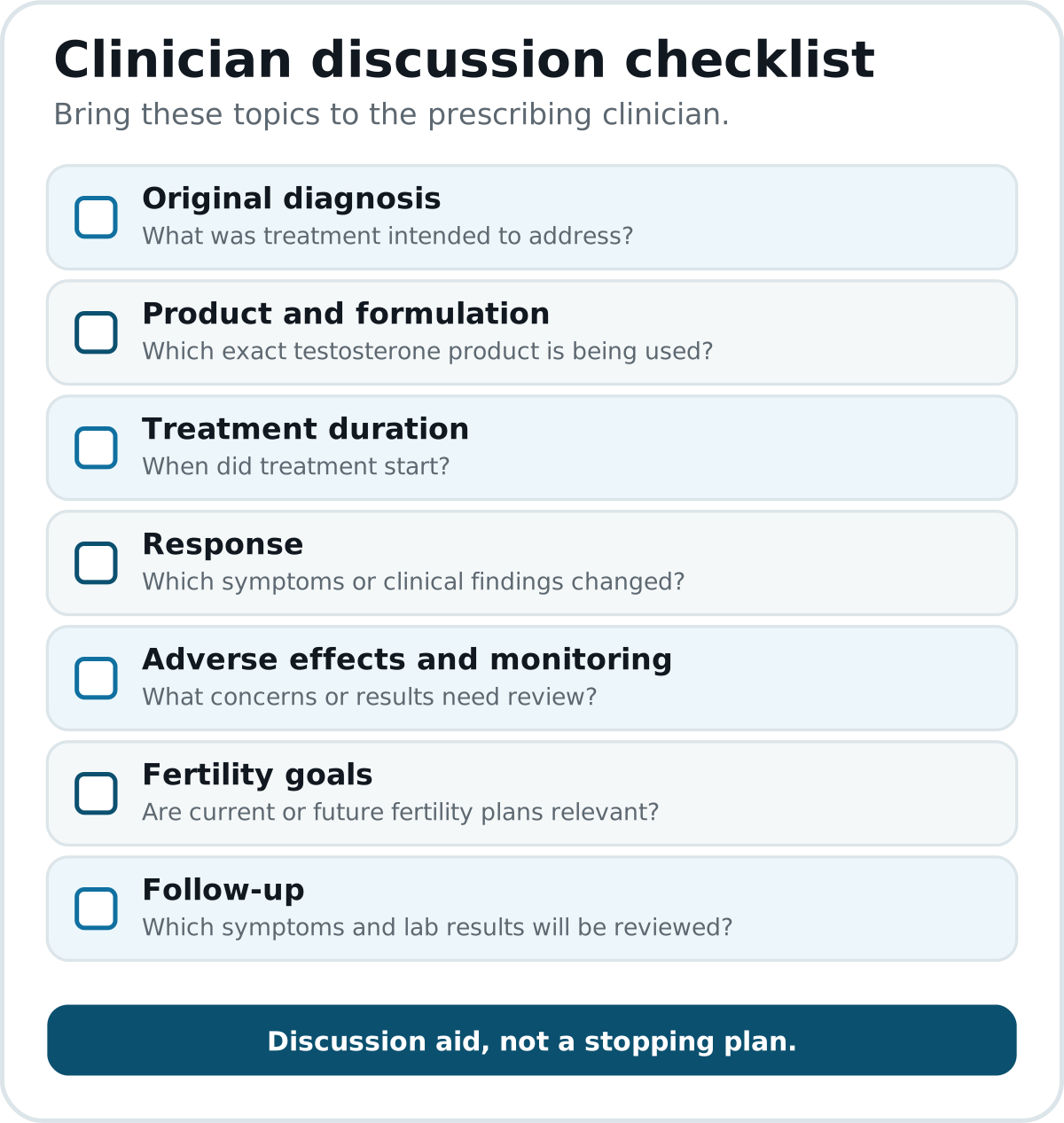
Bring enough information to reconstruct the treatment and its purpose. The table below is a discussion aid rather than a stopping protocol.
| Review area | Why it matters | Useful information to bring |
|---|---|---|
| Original diagnosis | Persistent and potentially reversible causes have different implications | Pretreatment symptoms, morning testosterone results, LH and FSH results, and relevant evaluation records |
| Exact product and formulation | Medication exposure declines differently across injections, gels, patches, and other products | Product name, concentration, route, prescribed schedule, and final administration date |
| Treatment duration | Longer or shorter exposure can change the context for follow-up | Start date, major dose changes, and missed doses |
| Response to treatment | Continuing therapy requires a clear purpose and a way to assess benefit | Which symptoms changed, which did not, and when the changes occurred |
| Adverse effects and monitoring | Some findings may alter the plan or require separate evaluation | Recent laboratory results, blood pressure records if requested, and new diagnoses or symptoms |
| Fertility goals | Exogenous testosterone can suppress sperm production | Current plans, prior semen analyses, and any reproductive-urology care |
| Follow-up plan | Symptoms and laboratory markers can change on different timelines | Which tests will be repeated, when they will be checked, and whom to contact with concerns |
Use exact dates where possible. A treatment record is more useful than an estimate such as "a few months ago." Include prescriptions, supplements, and other hormone products because they may affect laboratory interpretation or the next step.
Questions to ask before starting TRT
An exit discussion is useful before the first dose. Ask the prescriber:
- What diagnosis or medical cause are we treating?
- Which pretreatment results support that diagnosis?
- Which symptom or clinical finding should improve if treatment works?
- When will we decide whether the treatment has provided enough benefit?
- Which adverse effects and laboratory values will be monitored?
- How could treatment affect current or future fertility plans?
- What factors would lead us to adjust or stop treatment?
- What follow-up would be needed if treatment ends?
Clear answers create a shared record of the treatment goal. They also make a later decision less dependent on memory, fear, or a generic claim about lifelong therapy.
Planning a clinician-guided next step
If you are considering a change, write down the reason before contacting the prescriber. Include the exact product, last dose date, current symptoms, recent laboratory work, side effects, and fertility priorities. Ask what should happen before the next scheduled dose and which follow-up is appropriate for the formulation you use.
Optimize 360 publishes information about its testosterone replacement therapy services. A consultation establishes whether continued treatment, a change, or discontinuation is appropriate for the individual patient.
Sources
- FDA: Testosterone Information, content current June 23, 2026
- Endocrine Society: Testosterone Therapy for Hypogonadism Guideline Resources
- American Urological Association: Evaluation and Management of Testosterone Deficiency, validity confirmed 2024
- Handelsman DJ et al. Recovery of Male Reproductive Endocrine Function After Ceasing Prolonged Testosterone Undecanoate Injections. PMID 35000898; DOI 10.1530/EJE-21-0608.
- McBride JA, Coward RM. Recovery of Spermatogenesis Following Testosterone Replacement Therapy or Anabolic-Androgenic Steroid Use. PMCID PMC4854084; PMID 26908067.