


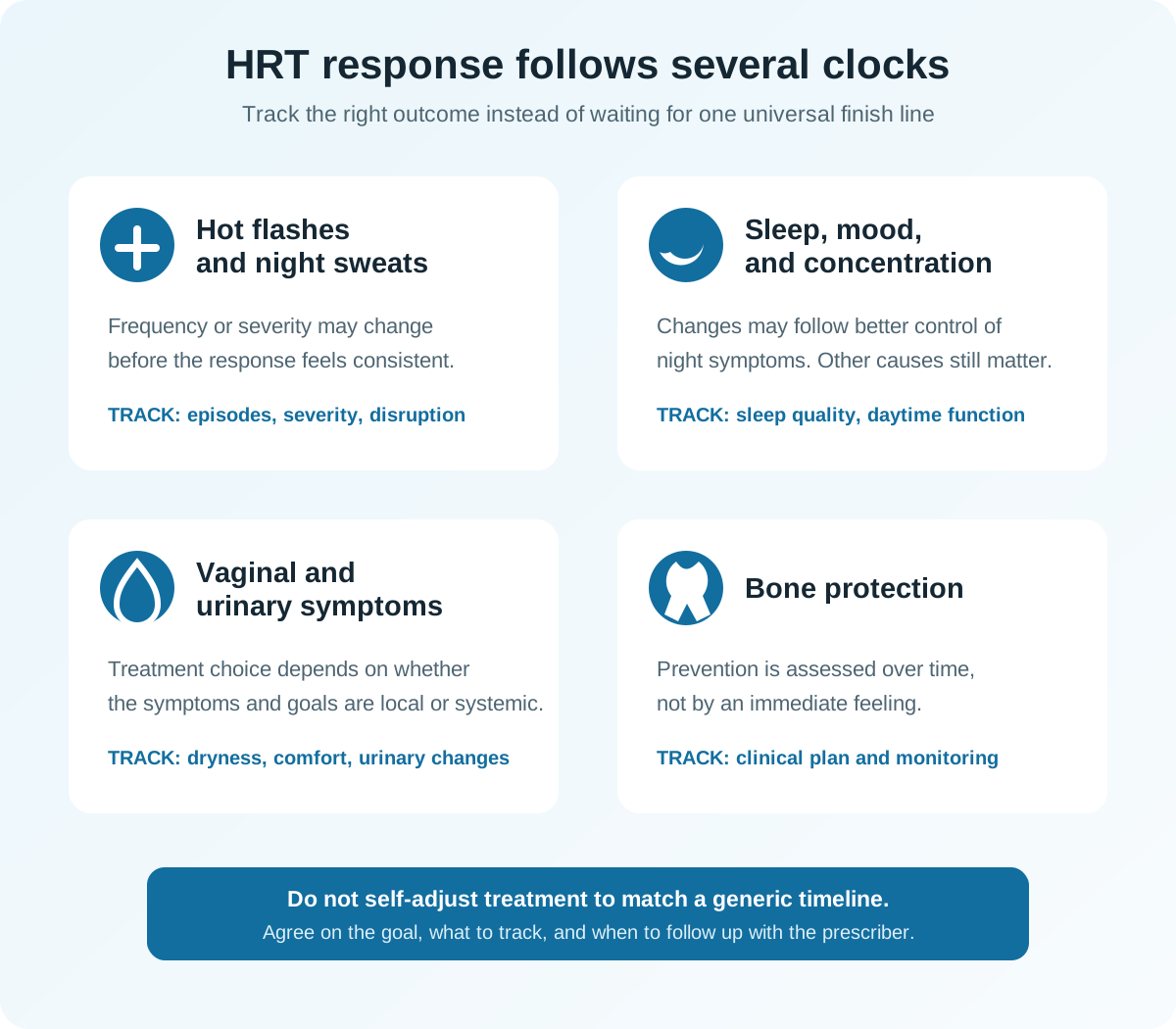
There is no single HRT timeline. In studies of one specific oral menopause therapy, a laboratory measure of vaginal tissue changed by week 4 and some sleep measures changed during weeks 4 to 8. Other outcomes are evaluated over longer periods. These study findings are not a promise for every product or patient: hot flashes, sleep, vaginal symptoms, mood, and bone protection do not move on the same clock.
Do not increase, skip, stop, or otherwise change hormone therapy based on a generic online timeline. Use the follow-up plan set by the prescribing clinician, and report new symptoms or side effects promptly.
Why HRT does not have one universal timeline
Hormone replacement therapy, or HRT, can refer to different prescriptions and treatment goals. This article focuses on hormone therapy for menopause symptoms. Systemic estrogen, estrogen combined with a progestogen, and low-dose vaginal estrogen do not have identical purposes or risk considerations.
The American College of Obstetricians and Gynecologists explains that systemic hormone therapy can help hot flashes and night sweats, while local estrogen therapy may be used for vaginal dryness and related local symptoms. The uterus, health history, symptom pattern, and treatment goal affect which approach may be considered.
That is why “When will HRT work?” needs a second question: work for which symptom and with which prescribed treatment? A person tracking fewer night sweats is measuring a different outcome from someone treating vaginal discomfort or using therapy for bone-loss prevention. Optimize 360's perimenopause symptom guide explains why the underlying symptom pattern may also fluctuate.
What research can tell us about timing
Clinical trials provide useful ranges, but they do not create a deadline for every patient. A later analysis of five trials involving conjugated estrogens and bazedoxifene reported changes in some sleep measures during weeks 4 to 8 and improvement in a laboratory measure of vaginal tissue by week 4 (Kagan et al., PMID 27433860). Those findings apply to the studied formulation and population; they are not a schedule for all HRT products.
A separate 12-week analysis examined when hot-flash reductions first appeared and when they became stable with the same type of therapy (Pinkerton et al., PMID 28463874). In patient terms, an early good day is not necessarily a stable response, and a partial response may precede a more consistent pattern.
Longer studies show why the question cannot be reduced to one number. The KEEPS symptom study compared low-dose oral conjugated estrogens, transdermal estradiol, and placebo; both active estrogen groups also received cyclic oral micronized progesterone. Hot flashes and night sweats declined in both active groups, but the first scheduled symptom assessment was at six months, so KEEPS does not establish a week-by-week onset. Group findings cannot predict one person's exact start date or final response.
HRT timelines by symptom and treatment goal
The table below is a guide to what clinicians may track. It is not a promise that a symptom will improve or an instruction to wait through a concerning change.
| Outcome | How timing may appear | Important limitation |
|---|---|---|
| Hot flashes and night sweats | A 12-week study of one oral regimen distinguished an early reduction from a stable response | It does not set a universal week for other formulations or patients |
| Sleep | One analysis of a specific oral regimen measured changes in some sleep outcomes during weeks 4 to 8 | Sleep problems can have causes unrelated to menopause and need separate evaluation |
| Vaginal or urinary symptoms | One analysis found a laboratory vaginal-tissue change by week 4 with the studied regimen | A tissue measure is not the same as symptom relief, and local and systemic therapies have different purposes |
| Mood, concentration, and energy | No single evidence-based onset applies across these broad symptoms | They should not be assumed to be hormone-related; persistent symptoms may require separate evaluation |
| Bone protection | Benefit is assessed over longer-term prevention and monitoring rather than an immediate feeling | Feeling unchanged does not show whether bone effects are present |
Why two people may respond at different speeds
- The symptom may have more than one cause. Medical conditions, sleep problems, medicine effects, and other factors can overlap with menopause symptoms.
- Perimenopause is variable. Symptoms and menstrual patterns can fluctuate, making a short good or bad stretch difficult to interpret.
- Formulation and route differ. Oral, transdermal, and local products have different uses and exposure patterns.
- The treatment goal differs. Relief of hot flashes is evaluated differently from local vaginal symptoms or bone-loss prevention.
- Adherence and other medicines matter. Missed doses, application problems, supplements, and prescription changes can complicate the picture.
- Individual risk and tolerability matter. Side effects or a new health issue may require reassessment before benefit can be judged.
How to tell whether HRT is working
Before treatment begins, identify the symptoms or clinical goal being treated. A simple baseline makes follow-up more useful than a general impression such as “I feel about the same.” Depending on the treatment goal, a clinician may ask about:
- Hot-flash and night-sweat frequency, severity, and sleep disruption
- Vaginal dryness, discomfort, pain with sex, or urinary symptoms
- Bleeding patterns, side effects, and any new symptoms
- Medication name, route, schedule, and missed doses
- Changes in medical history or other prescriptions
Use the follow-up timing provided by the prescriber. The 2022 Menopause Society position statement emphasizes individualized treatment and periodic reevaluation. Routine serum hormone testing is not the universal way to decide whether menopause therapy is helping; symptoms, indication, safety, and the prescribed product all matter. A clinic may still require selected laboratory work as part of its own prescribing and monitoring process.
What if symptoms have not improved?
No improvement does not automatically mean the dose should be raised. The clinician may need to review whether enough time has passed for that outcome, whether the medicine is being used as intended, whether the symptom has another cause, and whether the treatment still fits the patient's risks and goals.
Contact the prescribing office instead of experimenting with the dose or route. Bring a brief symptom record and the exact medication details. A focused conversation is more useful than comparing your response with another person's regimen.
Optimize 360 provides information about hormone replacement therapy and women's hormone therapy.
When to contact a clinician sooner
Do not wait for a routine follow-up if a new or concerning symptom appears. Contact the prescriber promptly about unexpected bleeding, a significant new side effect, or symptoms that are worsening rather than improving.
Use emergency services immediately if symptoms may represent a heart attack, stroke, blood clot, or another life-threatening reaction. The ACOG hormone therapy guidance discusses these uncommon but serious risks. Do not wait for a clinic reply during a possible emergency.
Frequently asked questions
Can some symptoms improve before others?
Yes. Hot flashes, sleep, vaginal symptoms, mood, and longer-term prevention goals are different outcomes. Improvement in one area does not prove that every treatment goal has been met.
Does the HRT route change how quickly it works?
Route and formulation affect medication exposure and treatment purpose, but they do not create a universal speed ranking. The right comparison depends on the symptom, prescription, health history, and evidence for that product.
Should hormone levels be checked to prove HRT is working?
Not always. Menopause therapy is often assessed through symptoms, side effects, indication, and periodic clinical review. Testing may be appropriate in selected situations, but the prescriber should decide what a result would add.
Sources
- American College of Obstetricians and Gynecologists: Hormone Therapy for Menopause
- The Menopause Society: 2022 Hormone Therapy Position Statement
- FDA: Hormone Replacement Therapies and Menopause Symptoms
- KEEPS: Longitudinal Changes in Menopausal Symptoms
- Kagan R et al. Timing and Persistence of Effect of Conjugated Estrogens/Bazedoxifene in Postmenopausal Women. PMID 27433860; DOI 10.1097/GME.0000000000000688.
- Pinkerton JV et al. Time to Transient and Stable Reductions in Hot Flush Frequency in Postmenopausal Women Using Conjugated Estrogens/Bazedoxifene. PMID 28463874; DOI 10.1097/GME.0000000000000888.