


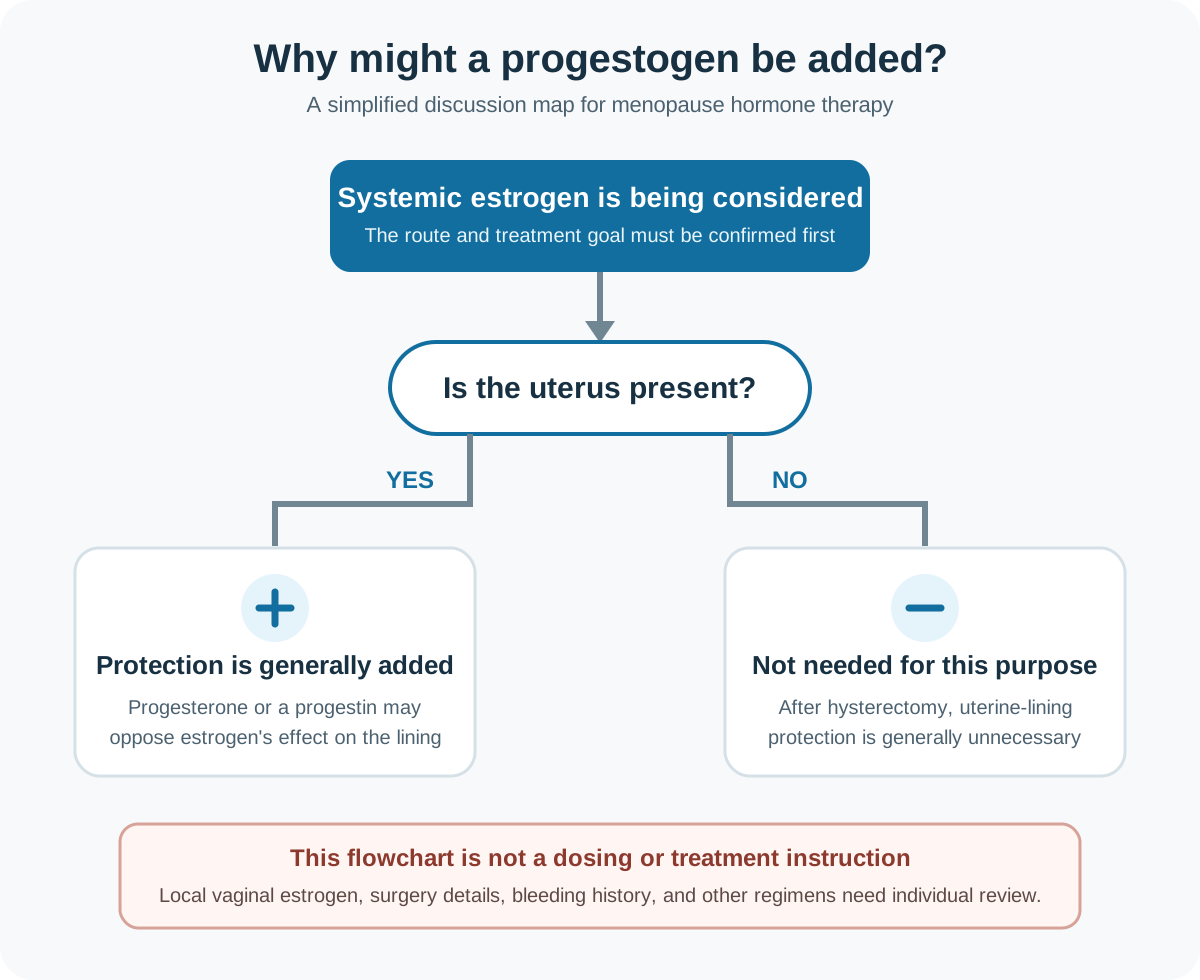
When systemic estrogen is prescribed for menopause symptoms and the uterus is present, a clinician generally adds a progestogen—progesterone or a progestin—to reduce estrogen-driven thickening of the uterine lining and the associated risk of endometrial cancer. People who have had a hysterectomy usually do not need it for uterine protection. Some low-dose vaginal products are local treatments, while other vaginal products provide systemic estrogen, so the exact product matters.
Do not add, skip, stop, or substitute progesterone, a progestin, or estrogen on your own. The product, route, schedule, and amount must match the prescribed plan. Unexpected bleeding or a significant new side effect needs clinical review.
Why the uterine lining changes the HRT plan
Estrogen can relieve menopause symptoms, but systemic estrogen also stimulates the endometrium, the tissue lining the uterus. Estrogen-only therapy can thicken that lining and increase the risk of endometrial cancer. Adding an appropriate progestogen reduces this risk.
The American College of Obstetricians and Gynecologists explains that people who still have a uterus generally receive estrogen plus a progestin because the added hormone lowers the uterine-cancer risk associated with estrogen alone. The FDA's current menopause hormone therapy overview likewise describes combination therapy for people with a uterus and notes that the endometrial-cancer warning remains for systemic estrogen-only products.
This is a protection strategy, not proof that every person needs two hormones. Uterus status, the reason for treatment, the estrogen route, medical history, and the exact product all matter. Optimize 360's overview of how menopause HRT is evaluated explains why one generic rule cannot replace a treatment-specific follow-up plan.
Progesterone, progestin, and progestogen are related terms
| Term | What it generally means | Why the distinction matters |
|---|---|---|
| Progesterone | A hormone produced by the body; prescription oral progesterone is one FDA-approved hormone therapy option | Its effects, side effects, route, and evidence should not automatically be assigned to every progestin |
| Progestin | A synthetic medicine designed to produce progesterone-like effects | Progesterone and individual progestins are distinct medicines and should not be substituted without prescriber direction |
| Progestogen | An umbrella term that includes progesterone and progestins | Guidelines may use this broader word when discussing endometrial protection |
Words such as “natural,” “bioidentical,” and “synthetic” do not settle whether a product is appropriate or whether it provides adequate uterine protection. ACOG recommends FDA-approved hormone therapy over compounded hormone therapy because compounded products can vary in strength and purity. Ask for the exact medication name and purpose rather than relying on a category label.
How combined therapy may be prescribed
ACOG describes two common ways to combine estrogen and a progestin when the uterus is present. In continuous-combined therapy, both are taken every day. In cyclic or sequential therapy, estrogen is taken daily and a progestin is added for 10 to 14 days each month. FDA uses “progestogen” as the broader category that includes progesterone and progestins. Products may be combined in one prescription or supplied separately.
Those patterns are not instructions for choosing a schedule. The prescribed plan depends on the products, the stage of menopause, bleeding history, tolerability, and treatment goals. The cited sources do not establish that an over-the-counter progesterone cream protects the uterine lining. Do not replace prescription therapy with an over-the-counter product.
When the answer may be different
- After hysterectomy: A progestogen is usually not required for uterine protection because the uterus has been removed. The type of surgery and any other reason for the prescription still need confirmation.
- With a vaginal estrogen product: Some low-dose products are local treatments for vaginal symptoms, while some vaginal products provide systemic estrogen. Confirm whether the exact prescription is local or systemic; do not decide based on the vaginal route alone.
- When surgery details are unclear: “Partial hysterectomy” can be used imprecisely in conversation. Confirm which organs and tissues were removed before making assumptions about the plan.
- When another prescription strategy is used: ACOG notes that a progestin-releasing IUD may be an option. Ask which product, amount, and schedule are intended to reduce endometrial-cancer risk; do not infer adequate protection from the label “HRT” or a medication list alone.
For a broader look at treatment options, see Optimize 360's HRT service information, women's hormone therapy overview, and medication pages for estradiol and progesterone.
Bleeding and side effects should be tracked, not guessed about
ACOG lists spotting or bleeding, temporary breast soreness, bloating, and headaches among possible effects of hormone therapy. Bleeding expectations differ by regimen. Record when it happened, how much occurred, the medication schedule, and any missed doses; do not improvise with doses.
Contact the prescribing clinician promptly if bleeding is heavy, persistent, troublesome, occurs after a period without bleeding, or does not match the prescribed plan. Ask which bleeding symptoms require urgent or emergency care. Report any significant or unexpected new symptom rather than assuming hormone therapy caused it.
Questions to bring to an HRT review
- Is my estrogen systemic or local, and what symptom is it intended to treat?
- Do my surgical records confirm whether my uterus is present?
- Is the second medication progesterone or a progestin, and what is its role?
- Is my regimen continuous or cyclic, and what should I do after a missed dose?
- Which bleeding changes or side effects should prompt an earlier call?
- When will benefits, risks, and the need to continue treatment be reevaluated?
The 2022 Menopause Society position statement emphasizes that hormone therapy should be individualized and periodically reevaluated. Bring the actual medication labels to follow-up so the discussion is about the prescribed products rather than broad hormone categories.
Frequently asked questions
Do I need progesterone if I had a hysterectomy?
Usually not for uterine protection, because the uterus is absent. A clinician may have another reason for prescribing it, and the surgery type should be confirmed before changing an existing plan.
Is progesterone safer than every progestin?
No universal comparison applies to every patient, product, dose, route, or outcome. They are different medicines with different evidence. The useful question is why the specific product was selected for your risks and treatment goal.
Can an over-the-counter progesterone cream protect the uterus?
The cited sources do not establish that an over-the-counter progesterone cream protects the uterine lining. Do not substitute a cream or supplement for prescribed therapy; ask the prescriber or pharmacist about the exact product.